
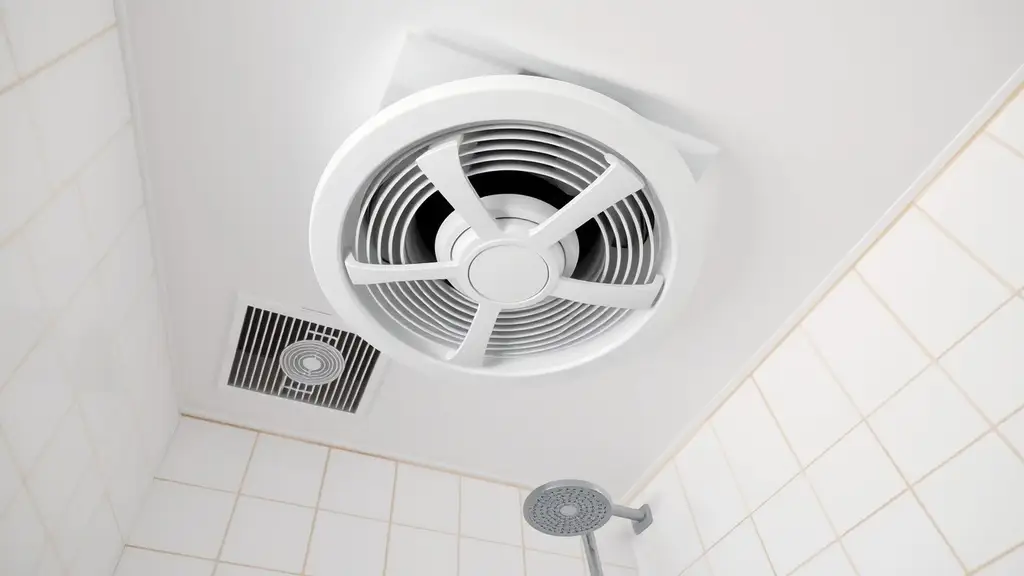
Bathroom fan calculator
An extractor fan should replace the air in the bathroom several times an hour to remove steam. Its airflow is the room volume times the air changes.
Your measurements
Result
- Fan airflow needed
- 83 m³/h
Choose a fan with at least this airflow; the noise level (dB) matters as much as the airflow.
How the calculation works
- Bathroom volume (m³) = length × width × height.
- Airflow needed (m³/h) = volume × air changes per hour (6, 8 or 10).
Worked example
A 2 × 2 m bathroom, 2.6 m high, has 10.4 m³. At 8 air changes an hour the fan must move at least about 83 m³/h.
What the calculator assumes
- 6–8 changes an hour suit a bathroom with a window or little use; 8–10 a windowless bathroom or one with many showers.
When to adjust the result
- Catalogue airflow is measured without ducting; with a long duct or many bends the real airflow drops.
- Extracted air must be replaced: leave a gap under the door or fit a transfer grille.
- Choose a quiet fan (under about 30 dB), ideally with a timer or humidity sensor so it keeps running after a shower. Local building rules may set a minimum extraction rate.
Making a bathroom fan actually work
A fan can only extract as much air as can get into the room, so leave a gap under the door (about 1 cm) or fit a vent. Mount it high and as far as possible from the door, ideally near or above the shower, and keep the duct short, straight and the full diameter of the fan outlet.
Run-on timers or humidity sensors keep the fan going after you leave, which is when most moisture is removed. In bathrooms, electrical equipment must suit the zone it sits in — check the IP rating and keep switches outside the wet zones.
Frequently asked questions
What size extractor fan for a bathroom?
Room volume × 6–10 air changes per hour; a small 10 m³ bathroom needs roughly 60–100 m³/h.
Why is my fan weaker than advertised?
Ducts and bends add resistance; catalogue figures are measured with free air flow.
Axial or centrifugal fan?
Axial fans suit short ducts through an outside wall; centrifugal fans keep their airflow over longer duct runs and through ceiling voids.
Why is there still mould with a fan?
Often the fan is too small, the duct too long or kinked, there is no air inlet, or it switches off as soon as the light does.