
Updated · 4 min read
In short
- A steady drip from the spout with everything else normal is almost always a worn washer or cartridge — a safe DIY job.
- Low pressure everywhere, banging pipes or damp patches on walls point to a bigger problem.
- If a part won't move, stop: forcing corroded parts turns a small repair into replacing the whole tap.
Signs the problem really is simple: just a worn part
Not every drip means a complicated problem. If the tap drips steadily but gently, only from the spout, and the rest of the system works normally — good pressure, no noises, no damp anywhere else — it is almost certainly a worn washer or cartridge, exactly the kind of repair you can do yourself with the right spare part. This is the most common scenario and in most cases it is fixed quickly, without extra risk.
A simple test to confirm the problem is limited to that tap: check whether the other water points in the house (another tap, the shower, the toilet cistern) work normally. If they do, the problem really is local and a DIY repair remains a safe choice.
Signs of a bigger problem
Some symptoms go beyond a worn part and deserve caution. Very low pressure across the whole house, not just at one tap, can point to a problem in the main system — a blocked filter, a wider blockage or an issue with the supply — not something a new washer will fix.
Loud banging in the pipes when water is turned on (sometimes called water hammer) usually signals pressure problems or air trapped in the system, unrelated to the tap itself. And if you notice damp or stains on a wall or ceiling near the pipework, there may be a hidden leak inside the wall — invisible at the tap, but able to make things much worse if ignored.
The risk of making a simple repair worse
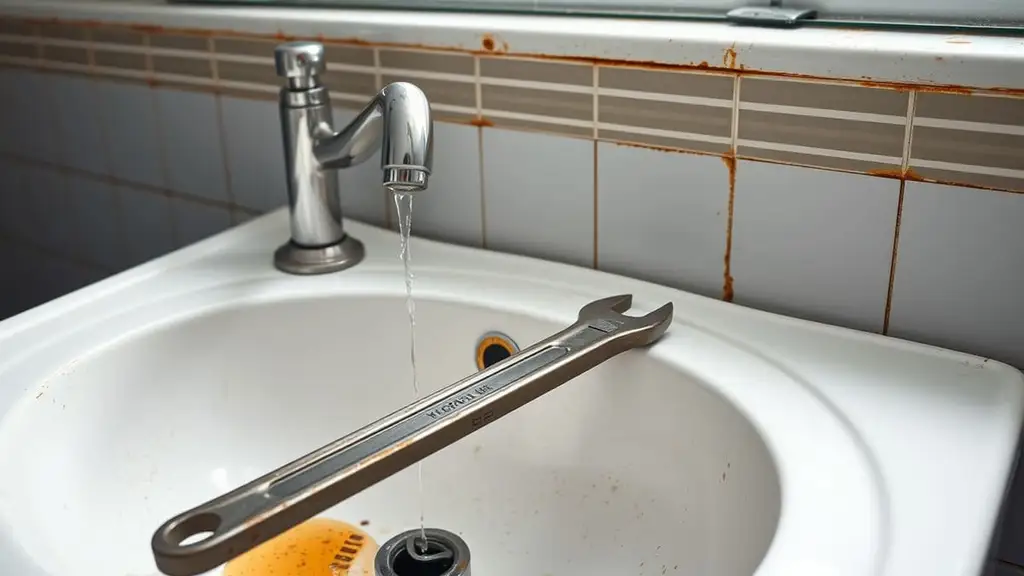
A real danger, especially with older installations, is forcing scaled-up or corroded parts while dismantling. A nut or screw that seemed merely stiff can snap suddenly if you apply too much force — and at that point a simple part replacement becomes replacing the whole tap body, a much bigger and more expensive job than planned.
If you feel unusually strong resistance when undoing a part, or see visible limescale or rust at the joints, stop and decide whether it is worth continuing alone or safer to call someone experienced, before a part gives way under the force.
Comparing the cost: a professional first time vs. an emergency call-out
Look at the cost realistically: calling a plumber for a genuinely complex problem from the start usually costs less than an amateur repair that ends badly — a broken part, a worse leak or a damaged pipe then needs an emergency call-out, which is usually more expensive and more stressful.
The simple rule: if the symptoms stay at the tap and the rest of the system looks normal, try the repair yourself with the right part and without forcing anything. If there are signs of a wider problem, or you meet unusual resistance while dismantling, stop and get specialist help before a small problem becomes a big one.