
Updated · 4 min read
In short
- Excavate about 20–25 cm for a footpath; geotextile; 10–15 cm compacted crushed stone; 3–5 cm sand or grit; then the paving.
- Compaction and a cross-fall of 1.5–2% decide whether the path stays flat.
- Edging restrains the paving from spreading sideways.
1. Route and width
Mark the route with string and pegs, or a hose for curves. Typical widths: about 60–80 cm for one person, 100–120 cm for two side by side or a wheelbarrow.
2. Excavation
Remove the topsoil across the full width plus about 10 cm each side for edging. Depth = sub-base + bedding + paving thickness, minus how much the path should stand above the lawn (usually 1–2 cm). Compact the formation and shape it to the final fall.
3. Geotextile and sub-base
- Lay geotextile on the formation with about 20 cm overlaps.
- Spread crushed stone in layers of about 10 cm.
- Compact each layer with a plate compactor, slightly damp, until it no longer marks underfoot.
4. Edging
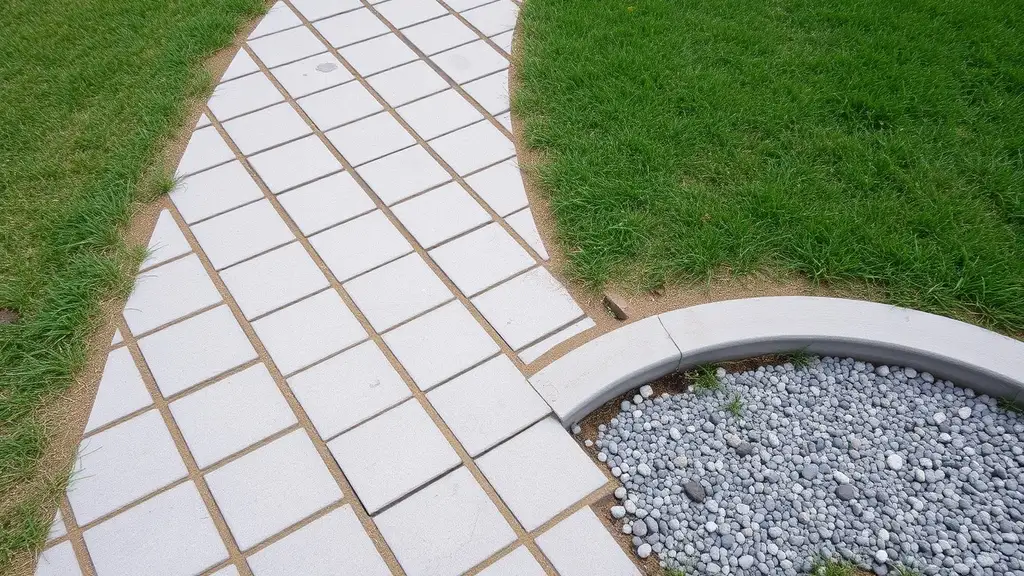
Set kerbs or edging on a concrete bed with concrete haunching behind, before paving. Metal or plastic edging pinned with stakes also works for garden paths.
5. Bedding and laying
- Spread 3–5 cm of sand or 0–4 mm grit and screed it off between two rails at the correct fall.
- Do not walk on the screeded bed — work from the laid paving.
- Lay the blocks with 2–3 mm joints to the pattern; cut edge pieces with a saw or block splitter.
- Brush fine sand into the joints, compact with a plate fitted with a rubber mat, then top up the sand.
Simpler versions
Gravel path: the same sub-base, then 3–5 cm of decorative gravel between edgings. Stepping stones in the lawn: each slab on a sand bed, about 60–65 cm between centres, set flush with the grass so you can mow over them.
Frequently asked questions
Do I need a membrane under a path?
A geotextile between soil and sub-base is recommended — it stops the stone mixing into the soil. Plastic sheet is not suitable because it blocks drainage.
Calculators for this job
Paving calculator
How many pavers a path, driveway or patio needs, with cutting waste included.
Gravel calculator
How many cubic metres and tonnes of gravel or hardcore a layer under a foundation, path or hardstanding needs.
Sand calculator
How many cubic metres and tonnes of sand a bedding layer under paving, a path or a light foundation needs.