
Updated · 6 min read
In short
- A wall-hung WC looks cleaner but needs a frame and a false wall that takes 12–15 cm of depth.
- Thermostatic mixers keep the temperature steady when pressure changes — worth it in the shower.
- Fixtures are typically 30–40% of the bathroom materials budget; spend on cartridges and flush mechanisms.
Wall-hung vs. floor-standing WC
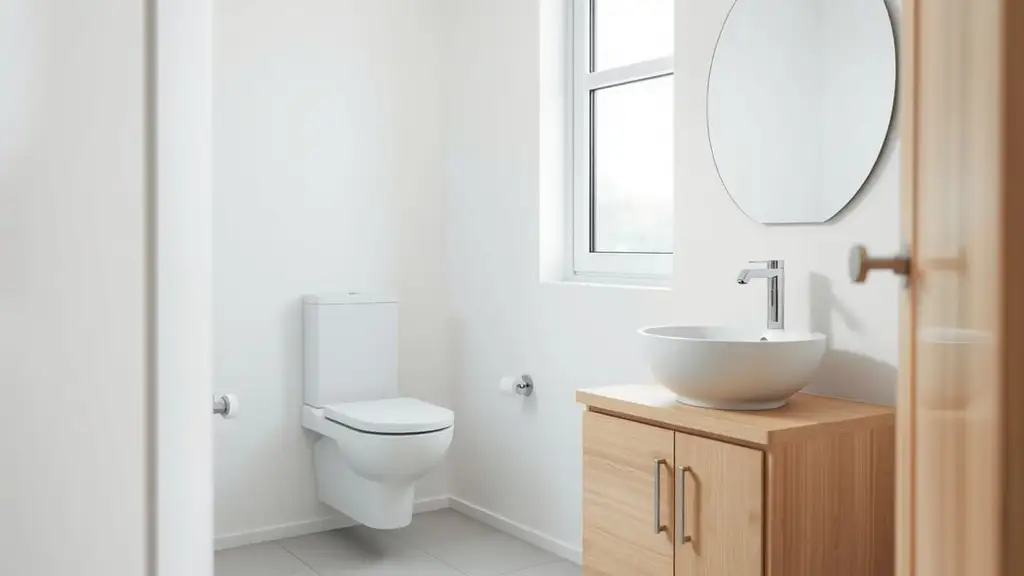
A wall-hung WC, with the cistern concealed in a false wall (an installation frame), looks cleaner, is easier to clean around because the floor beneath stays free and, in many small bathrooms, makes the space feel larger. The real cost isn't just the pan: the installation frame, concealed cistern, flush plate and above all the false wall of plasterboard or light masonry that has to be built and tiled add significant labour and materials over a floor-standing pan. In a small bathroom the false wall also eats into the space — usually 12–15 cm of depth, sometimes more.
A floor-standing WC sits directly on the floor with a visible (close-coupled) or semi-concealed cistern and is the cheaper, faster option, especially for budget renovations or when the WC stays in the same position. Structurally, a correctly installed wall-hung WC (frame fixed solidly to a load-bearing wall or the floor, not just thin plasterboard) carries weight as well as a floor-standing one — problems come almost exclusively from poor installation, not from the concept.
Countertop vs. wall-hung basin
A simple wall-hung basin (fixed straight to the wall with no furniture underneath) is the cheapest and most compact option, right for small bathrooms or cloakrooms where storage isn't a priority. A countertop basin on a cabinet or console offers much more storage for towels and toiletries and hides the trap and isolation valves — but takes more space and costs more, because the price includes the furniture.
A middle option is a semi-recessed basin on an existing worktop, which keeps the storage without the cost of a made-to-measure stone top. Whatever the type, check the mounting height against the main users — the standard is around 85 cm to the rim, but it's worth going a little lower in a bathroom also used by children.
Mixers: single-lever vs. thermostatic
A single-lever mixer, with one handle setting both flow and temperature, is the standard at the basin and in many showers thanks to its affordable price and simple installation. A thermostatic mixer automatically holds a set temperature regardless of pressure changes in the system (for example when someone flushes a toilet elsewhere in the house) — useful especially in the shower, where a sudden temperature shock is unpleasant and can be dangerous for children or older people. It costs noticeably more than an equivalent single-lever mixer, but the difference is felt mostly in homes with unstable pressure or several users at once.
The quality of the ceramic cartridge inside matters more in the long run than the outside look — a good cartridge survives thousands of open–close cycles without dripping, while a cheap mixer with a weak cartridge can start dripping within two or three years. On finishes (chrome, matt black, brushed gold), matt finishes show limescale and water marks less than polished chrome, but are usually more expensive and harder to match later if you add accessories.
Accessibility: a bathroom that works for older people
If the bathroom will be used by people with reduced mobility, a few decisions made at the design stage cost little now and avoid a second renovation later: a level-access shower without a step, grab rails fixed into solid wall (not just plasterboard, so plan their positions relative to the pipework early), a fold-down shower seat and a WC mounted slightly higher than standard. Slip-resistant surfaces become mandatory, not optional, in this scenario.
Many of these elements (grab rails, shower seat) can be added later without disturbing the tiles, if reinforcement was left in the wall at the right points during installation — a few minutes' conversation with the plumber or builder before tiling can save a costly job a few years on.
How to allocate the fixtures budget
As a rule of thumb, sanitaryware and mixers (WC, basin, bath or shower enclosure, mixers) are usually 30–40% of the materials budget of a bathroom renovation, the rest going on tiles, waterproofing, adhesives and accessories. Within that share, the price gap between budget and premium ranges is much larger for fixtures than for tiles — a premium WC or mixer can cost several times the basic version while doing exactly the same job. Prioritise the budget where the difference is felt every day: the quality of the mixer cartridge and of the WC flush mechanism, not necessarily the outside design.
Calculators for this job
Renovation budget calculator
Add up the cost items from your quotes, reserve a contingency and compare the total with your available budget.
Wall tile calculator
The wall tile area for a bathroom or kitchen and the number of tiles, with openings deducted and waste included.
Water pipe calculator
An estimate of the water supply pipe a home's taps and mixers need.