
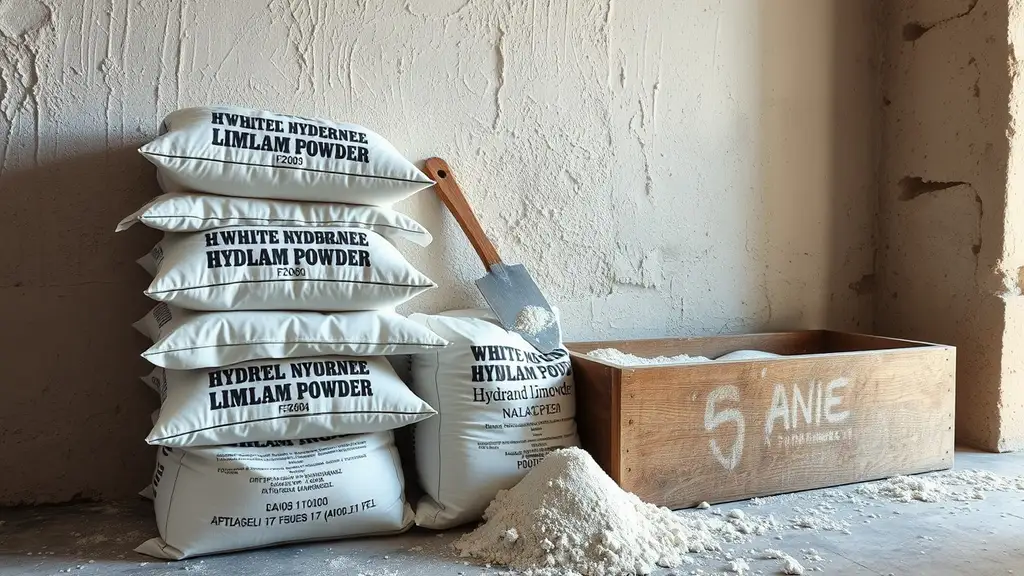
Lime plaster calculator
Lime plasters suit old brick and clay walls because they let the wall breathe. The calculator gives a guide quantity of lime from the area and the thickness; sand is added according to your recipe.
Your measurements
Result
- Lime needed
- 480 kg
- Bags to buy
- 20 pcs
8 kg per m² per centimetre is a guide value; sand (and cement in lime-cement plaster) is added according to your recipe.
How the calculation works
- Lime (kg) = area × plaster thickness (cm) × 8 kg.
- Bags = kilograms ÷ bag size, rounded up.
Worked example
For 30 m² of plaster 2 cm thick: 30 × 2 × 8 = 480 kg, which is 20 bags of 25 kg.
What the calculator assumes
- 8 kg per m² per centimetre is a guide value; the exact amount depends on the recipe — lime putty, hydrated lime powder or a ready-mixed lime plaster.
- Sand (and cement in lime-cement plasters) is added according to the chosen recipe.
When to adjust the result
- With a ready-mixed product, use the consumption on the bag or the plaster calculator.
- Lime plaster needs time and moderate conditions to cure — avoid frost and strong sun on fresh coats.
Working with lime
Lime mortars and plasters are softer and more vapour-open than cement, which makes them the right choice for old solid masonry, stone and historic buildings: they let walls dry out and accommodate small movements. Using hard cement mortar on soft old bricks can trap moisture and damage the masonry.
Lime is caustic. Wear eye protection and gloves, add lime to water rather than water to lime, and keep it off skin. Lime work must be protected from frost and from drying too quickly — mist it with water in warm weather and work in the milder seasons.
Frequently asked questions
Why use lime plaster on old walls?
It is vapour-open and flexible, so moisture can leave the wall and the plaster moves with it instead of cracking or trapping damp.
How thick is a lime plaster coat?
Often 1–2 cm in total, applied in several thin coats rather than one thick one.
Hydrated lime or hydraulic lime?
Hydrated (air) lime sets slowly by carbonation and is used in non-hydraulic mortars or added to cement mixes; natural hydraulic lime (NHL) sets partly with water and is stronger and faster.
Why add lime to cement mortar?
It makes the mortar more workable, improves bond and makes it slightly more flexible, which reduces cracking.