
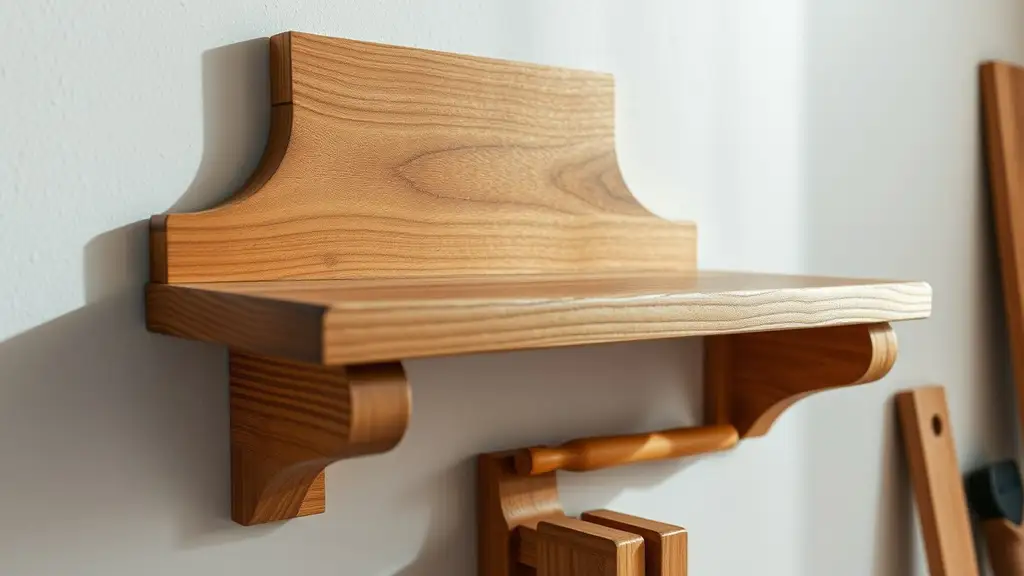
Updated · 3 min read
In short
- Softwood (spruce, pine) laminated board or dry planks of 18–28 mm are easy to start with.
- 18–20 mm suits light items up to about 80 cm between brackets; 25–28 mm or closer brackets for books.
- Sand 120 then 180–240 grit, finish with oil, wax or water-based lacquer.
Materials and tools
- spruce or pine laminated board 18–28 mm (or oak, beech for looks);
- metal brackets or a floating-shelf rod system;
- wall plugs and screws suited to your wall (brick, concrete, aerated block or plasterboard);
- saw or circular saw, drill, spirit level, tape measure, pencil;
- 120 and 180–240 grit abrasive paper, wood oil or water-based lacquer, a cloth.
Step by step
- Measure and cut: length and depth (20–25 cm for books, 15 cm for decorative items). Many DIY stores cut to size.
- Lightly round the edges with sandpaper or a small plane — it looks more finished and does not chip.
- Sand along the grain, first 120 then 180–240. Wipe the dust with a slightly damp cloth.
- Finish with 2–3 thin coats of oil or lacquer, drying and lightly sanding between coats.
- Mark the bracket line on the wall with the level and check for cables and pipes with a detector.
- Fix the brackets with plugs suited to the wall, then screw the shelf to the brackets from below with short screws.
Floating shelf
A floating shelf sits on metal rods fixed to the wall and drilled into the shelf's back edge. The board must be thicker (at least about 35–40 mm for loaded shelves) and the holes drilled perfectly straight — a drilling guide helps. Floating shelves hold less weight than bracketed ones.
Mistakes to avoid
- brackets too far apart for books — beyond about 80 cm the shelf sags over time;
- ordinary plastic plugs in plasterboard or aerated block;
- timber that is not dry, which warps after a few weeks indoors;
- lacquer applied in one thick coat — it runs and stays tacky.
Frequently asked questions
How thick should a bookshelf board be?
Up to about 80 cm between brackets, 18–20 mm is enough for light items; for books use 25–28 mm or brackets closer together. The shelf should not visibly bow under load.
Oil or lacquer for a wooden shelf?
Oil keeps a natural look and is easy to touch up; lacquer protects better against moisture and stains. Either way, thin coats with light sanding in between.