
Updated · 5 min read
In short
- Combine ceiling light, a reading light on each side of the bed and optional soft accent light.
- Each bedside light needs its own switch within reach of the bed; two-way switching for the ceiling light.
- Use warm white (2700–3000 K) in the bedroom; avoid cool light above 4000 K in the evening.
The layers of light in a bedroom
A well-lit bedroom doesn't rely on one central source but on several layers, each with a different role. General light (ceiling light, spots or a pendant) gives basic visibility when you come in or clean, but used alone in the evening it's too strong and too flat for relaxing. It's useful, but shouldn't be the only source.
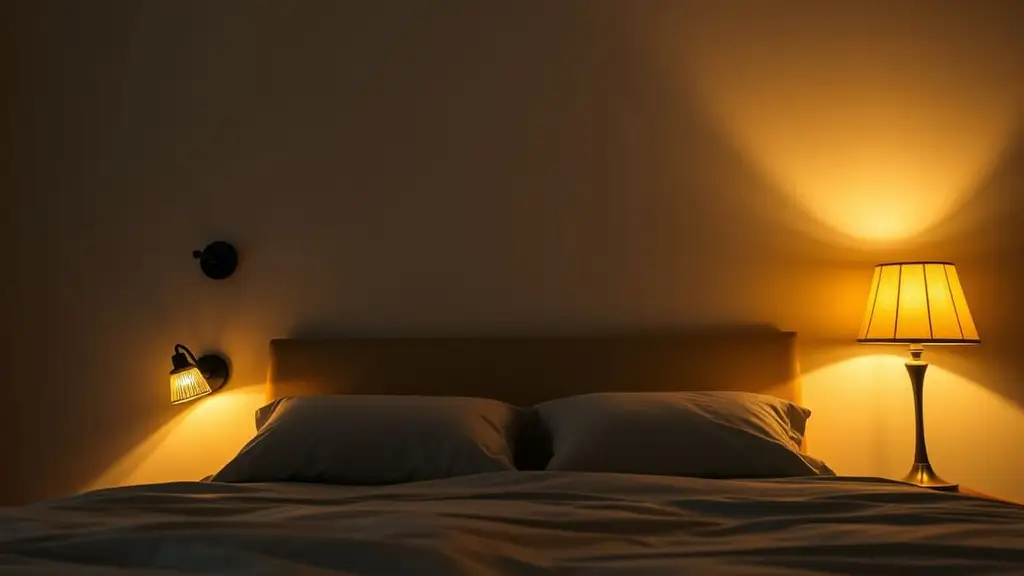
Task light (bedside lamps or reading wall lights) matters most for everyday comfort — it lets you read or use your phone without disturbing a sleeping partner, if each side of the bed has its own independently switched source. Accent light (LED strips behind the headboard, inside the wardrobe or on a decorative shelf) is optional, but adds depth and can serve as a discreet night light, much gentler than a ceiling bulb switched on at 3 a.m.
Why bedside lights need their own switch
The most common design mistake in bedroom lighting is feeding the bedside lamps from the same socket or circuit without individual switches — or worse, with no way of turning them off without getting out of bed. Ideally each bedside lamp has its own switch, either on the cable or as a wall switch right next to the bed, within reach — not by the door where the general light switch is.
A dimmer on the bedside circuit, or even on the general light, makes a real difference in the evening — it lets you lower the light gradually as you get ready for sleep instead of going straight from bright to completely dark. A master switch by the door that turns off the whole bedroom from one point is an extra comfort that's easy to design in at the wiring stage.
Plan sockets and switches before the finishes
The exact positions of sockets and switches must be fixed before the walls are closed (first-fix wiring), not after the furniture has arrived — a socket too high or too low for the bedside table, or one later blocked by a wardrobe, is a costly mistake to fix after finishing. Decide from the plan where the bed, bedside tables and wardrobe will go, then mark on the wiring plan the sockets needed for lamps, phone chargers and perhaps a TV.
A practical rule: at least one double socket on each side of the bed (lamp plus charger), about 50–60 cm above the floor, or even inside the bedside table if it has a cable cut-out. General light switches are usually two-way — one by the door, one by the bed — so you can turn the light off once you're already under the covers.
The right colour temperature for sleep
The colour temperature of bulbs (measured in kelvin) directly affects the mood of a room. Warm light (2700–3000 K), yellowish-orange like candlelight or a sunset, encourages relaxation and suits a bedroom far better than cool light. Avoid cool bulbs (over 4000 K, bluish white) in the bedroom — they suit a kitchen or office, where you need alertness, not relaxation before sleep.
Cool light in the evening can delay natural sleepiness, because the blue part of the spectrum partly suppresses the body's melatonin production — another reason to avoid both cool ceiling bulbs and phone or TV screens right before bed. For flexibility, tunable LED bulbs (warm to neutral) in bedside lamps let you pick the shade for the moment — warmer in the evening, a little more neutral in the morning when getting dressed or doing make-up.
Calculators for this job
Room lighting calculator
The lumens a room needs and how many bulbs or spots, from the area and the room type.
Electrical cable calculator
An estimate of the electrical cable a home's sockets and lights need.
Consumer unit size calculator
How many circuits a home has and how many modules the consumer unit needs.