
Updated · 4 min read
In short
- Layers: adhesive, EPS or mineral-wool boards, anchors, reinforced base coat with mesh, primer, finish render.
- Typically 6–8 anchors per m² in the field, more at corners and edges.
- Most failures come from details: plinth, window reveals, sills and board joints.
The layers in order
- Prepare the wall: clean, sound, no loose render; prime if very absorbent.
- Fix the base (starter) track horizontally at the bottom of the insulation.
- Bond the boards with adhesive around the edge and in dabs (or full-surface on very flat walls), staggered like brickwork, with no joints at the corners of openings.
- Anchors once the adhesive has set — typically 6–8 per m², more at corners and edges.
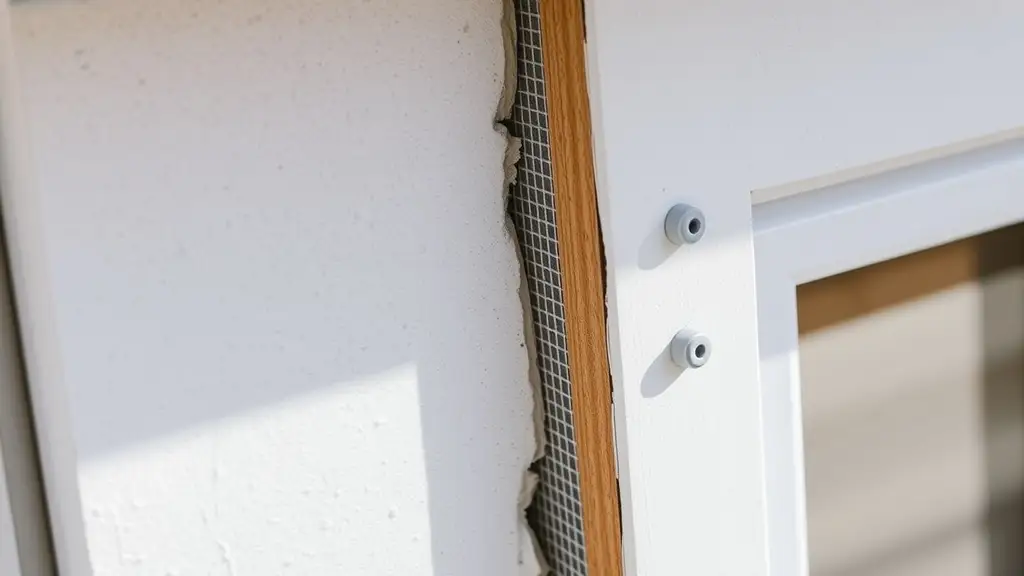
- Reinforced base coat: a coat of adhesive, glass-fibre mesh embedded with about 10 cm overlaps, then a second coat. Add diagonal mesh patches at window corners.
- Primer, then the finish render in the chosen colour.
The details that decide durability
- Plinth: in contact with the ground and up to about 30 cm above it, use XPS or dedicated plinth boards that tolerate moisture.
- Sills: sloped outwards with a drip, so water does not run down the façade.
- Windows: insulate the reveals; seal to the frame with profiles or tapes, not silicone alone.
- Joints between boards: fill with insulating foam, not adhesive, which creates a thermal bridge.
- Weather: no work below about 5°C, in rain or strong sun.
Thickness
Thickness depends on the existing wall and on energy requirements; local regulations and funding schemes often set a minimum U-value. Beyond a certain point each extra centimetre saves less — calculate the wall's U-value before ordering.
Frequently asked questions
EPS or mineral wool?
EPS is cheaper and easier to fit; mineral wool is non-combustible, more vapour-open and better acoustically, but costs more. Fire rules can require mineral wool at least in strips or on taller buildings.
Calculators for this job
Insulation board calculator
The number of insulation boards and the insulation volume for a wall, façade or floor, with cutting waste.
U-value calculator for walls
A wall's U-value before and after insulation, the drop in heat loss and the thickness needed for a target U-value.
Decorative render calculator
How many kilograms and packs of decorative render a façade or wall needs, depending on the grain size.