
Updated · 6 min read
In short
- Keeping fixtures in the same positions often lets you keep the pipework; moving the WC almost always means breaking out the floor.
- Check water pressure and the drain stack before tiling — old galvanised pipes are best replaced now.
- Plumbing and electrics are finished and tested before waterproofing; waterproofing before tiling.
When to keep the existing pipework and when to break it out
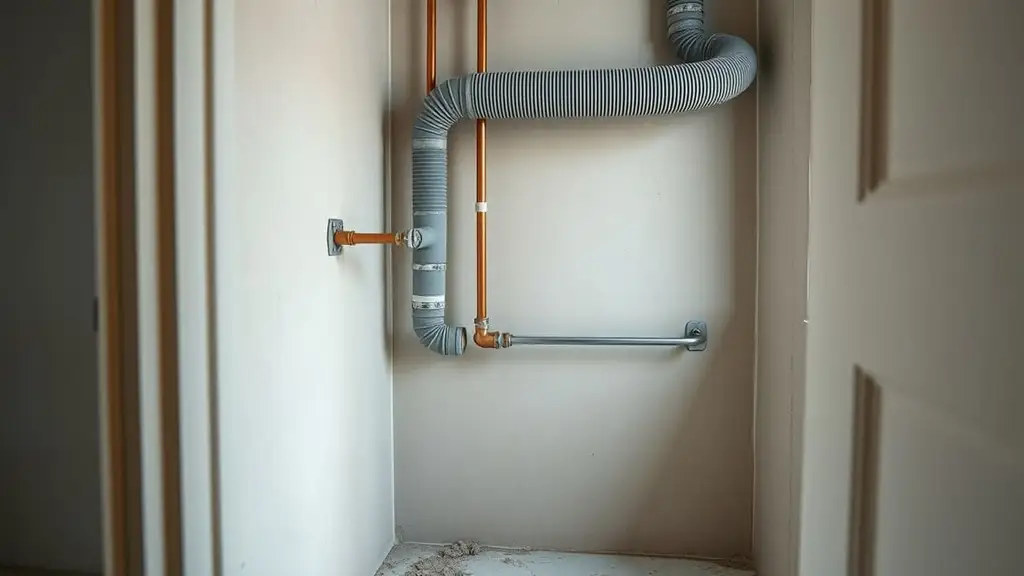
If the new bathroom layout keeps the WC, basin and shower or bath exactly where they are, you can often keep the existing water and drain routes and just replace the fixtures and mixers — which considerably reduces cost and duration, because the screed and walls aren't broken out for new pipes. If you move any fixture, especially the WC (which needs a minimum fall to the stack) or the shower, you'll almost certainly have to break out the screed and perhaps the wall to reroute the pipes.
This plumbing work must be completely finished before waterproofing and tiling, not after — any later route change means breaking freshly laid tiles. So the final position of every fixture must be decided and confirmed before the plumbers arrive, not 'on the fly' during the work.
Water pressure and the condition of the drain stack
Before any tiling, check the water pressure at the bathroom outlets and the condition of the drain stack, especially in an older building. Low pressure can mean limescale in old galvanised steel pipes, a problem that new mixers won't fix — only replacing the supply pipework will, which is much easier now, while walls and floor are open anyway, than in a few years.
Likewise, a partly blocked stack or one with the wrong fall shows up as slow drainage or smells, symptoms easy to ignore until they become an emergency. Any repair discovered after tiling means breaking tiles already laid, so checking and, if needed, replacing these routes should be a mandatory step before waterproofing, not an option 'if there's budget left'.
Ventilation: humidity and mould
A bathroom produces water vapour every day from the shower and bath, and without effective extraction the humidity stays trapped and encourages mould on grout, ceilings and behind furniture. An extractor fan on the existing vent route (or a new one if the bathroom has no window) should be sized to the room volume, not chosen at random — an undersized fan can't remove humidity fast enough after a shower.
Many modern fans have a humidity sensor or timer, starting with the shower and running a few minutes after, so you don't have to switch them on every time. Even with a window, mechanical ventilation is recommended as the main solution in the cold months, when the window stays shut most of the time — natural airing alone doesn't cover the daily need in a bathroom in active use.
Electrics: safety zones near water
Bathroom wiring is subject to stricter safety rules than the rest of the home because of the proximity of water. Local wiring regulations define zones around the bath and shower: sockets must keep a minimum distance from water sources and be protected by a residual-current device, and in the zones immediately around the bath or shower only suitably rated equipment is allowed — typically lighting with an adequate IP rating (IP44 or higher where it can be splashed). Ordinary light switches go outside the wet zones or are replaced by suitably protected types.
If you're replacing the bathroom electrics entirely — a wise choice if the wiring is old and the walls are being opened for tiling anyway — plan the number and position of sockets for a hair dryer, shaver or a recirculation pump early, so the routes are ready before plastering and tiling rather than added later as surface wiring. The work must be done by a qualified electrician.
The right order: services before waterproofing and tiling
The sequence of work in a bathroom isn't negotiable when it comes to services: any change to water, drainage or electrical routes must be finished and tested before waterproofing, and the waterproofing must be finished and checked (including a leak test, if possible) before tiling starts. Breaking that order — for example tiling before you're sure of the final position of a socket or an isolation valve — is the most common reason a bathroom renovation overruns its budget and schedule.
Calculators for this job
Water pipe calculator
An estimate of the water supply pipe a home's taps and mixers need.
Drain pipe calculator
An estimate of the drain pipe from each waste point to the stack.
Bathroom fan calculator
The airflow a bathroom extractor fan needs, from the room volume and air changes per hour.
Waterproofing membrane calculator
How many rolls of waterproofing membrane a terrace, flat roof or foundation needs, with the overlap included.