
Updated · 3 min read
In short
- Cables and pipes in walls and screed must be finished, tested and accepted before covering.
- Fix the position of every socket, switch, light point and tap at design stage.
- Photograph or sketch the routes before covering them.
What actually hides under the plaster
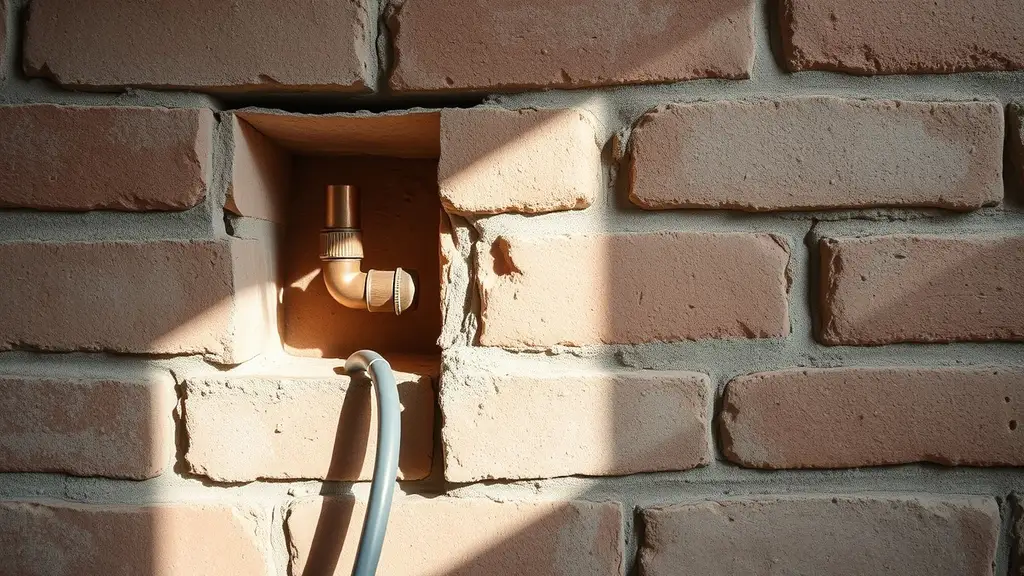
Electrical cable routes and water and drain pipes buried in walls or screed must be completely finished, tested and accepted before plaster or screed covers them for good. Once covered, any later access means breaking out — exactly the messy work the rest of the sequence tries to avoid after the finishes.
Why the services plan is made at design stage
The position of every socket, switch, light point or tap must be fixed before the services are run, not decided 'as the work goes'. A change requested after the routes are already chased into the wall means partly redoing finished work, with extra cost and time.
Test before covering, not after
The electrical installation is tested live and the plumbing pressure-tested before plaster or screed goes over them. A minor leak or a poor connection missed at this step becomes much harder to locate and repair once everything is covered and finished.
Record the routes for the future
Before covering, photograph or sketch the exact routes of hidden services — simple documentation that prevents, years later, a hole drilled at random right through a cable or pipe when putting up a shelf or doing a small wall repair.