
Updated · 3 min read
In short
- Keep a little of the tiles, flooring and wallpaper — the same batch may be unobtainable later.
- Store dry, at stable temperature, labelled with product and batch.
- Return, sell or donate large surpluses; don't keep opened adhesives and fillers.
When they're worth keeping for later repairs
Small amounts of leftover tiles, wallpaper or flooring are the first priority to keep, because those are exactly the materials that may not be available identically in a few years if the manufacturer changes batch or discontinues the model. A spot repair after moving furniture or a household accident is much simpler and more discreet with the same material from the same batch than with an approximate match found years later.
Storing kept materials correctly
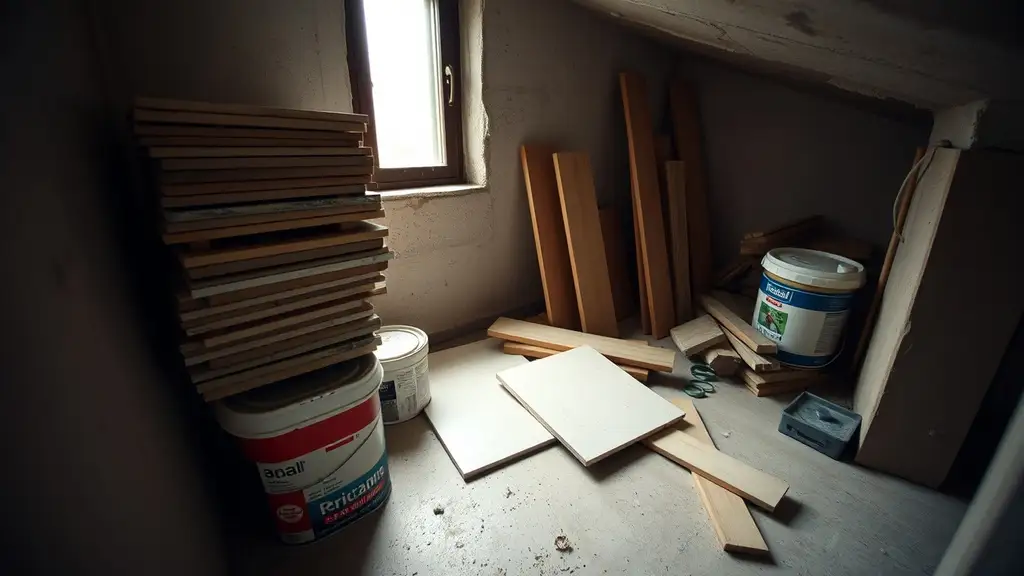
Leftovers should be stored in conditions similar to those recommended before installation — away from damp and extreme temperature swings and, where possible, in the original packaging or clearly labelled with product name and batch. A forgotten corner of a garage or an unheated balcony can ruin perfectly usable material, turning a useful reserve into waste a few years on.
When large quantities just take up space
If large quantities are left, beyond a reasonable repair reserve (usually a few square metres or a few packs), keeping them no longer makes practical sense. Returning them to the supplier (if the shop's policy allows), selling them or donating them to someone with a similar project is more sensible than storing rarely used materials indefinitely.
Consumables not worth keeping at all
Opened and partly used adhesives, fillers or paints have a limited life once opened, however well they're resealed — keeping them 'for later' often ends with a dried-out or unusable product next time. For such consumables, buying exactly the quantity needed, calculated in advance, is more efficient than hoping an opened remainder will still be good months later. Dispose of leftover paints and chemicals through your local waste collection rules.