
Updated · 4 min read
In short
- Two similar totals can cover completely different work — compare line by line.
- Specified materials matter as much as price; vague quotes are a warning sign.
- Give every contractor the same list and quantities so quotes are comparable.
The total price alone is the most misleading criterion
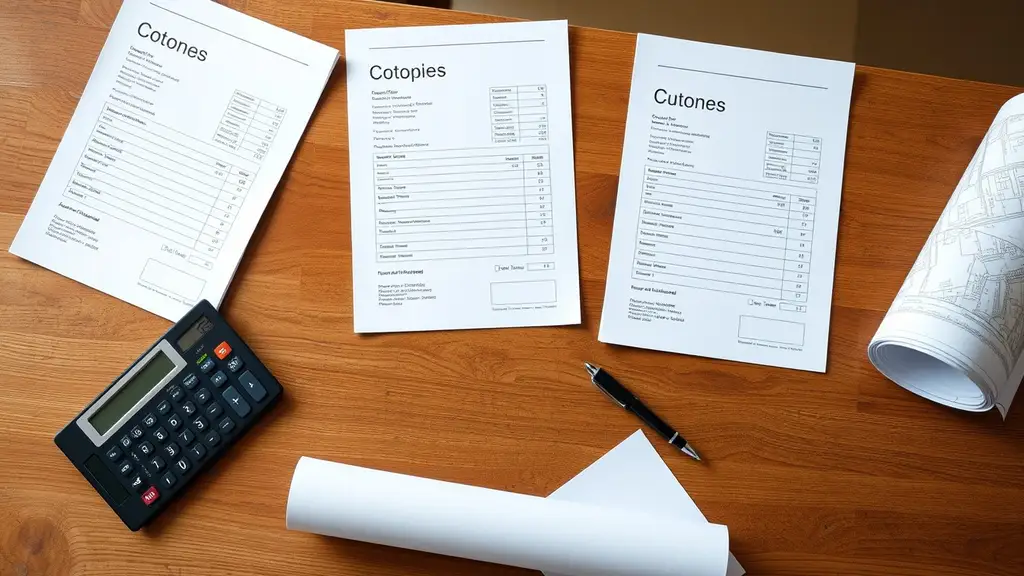
The most common mistake when comparing quotes is lining them up by the final figure. Two quotes with a similar total can include completely different work — one includes final cleaning and removing the rubble, the other doesn't; one includes fully fitting the sanitaryware, the other only connecting it. Comparing prices without checking what each covers is misleading and can lead to a decision based on a number that doesn't reflect the same work.
The real first step is checking explicitly what each quote includes — line by line, not just the bottom figure. Make a simple list of all the work and related services the project needs — demolition, rubble removal, protecting existing furniture, final cleaning — and check for each quote whether every point is explicitly included or missing altogether.
The specified materials matter as much as the price
A cheaper quote may use lower-quality materials than a more expensive one that already includes premium materials. That difference doesn't show in the total, only in the detailed specification of each line — the type and brand of materials, their thickness or grade, whether secondary consumables are included.
A good quote states the materials explicitly, not just the general category of work. The absence of these details is itself a signal — ask for clarification before comparing prices rather than assuming quotes are equivalent. This matters most where materials are a large share of the cost — waterproofing, windows, heating systems — because a different quality choice there is felt long after the job is finished and paid for.
The timescale and whether it's realistic
A good price with an unusually short timescale compared with the other quotes deserves extra caution. An unrealistic timescale can hide either an underestimate of the job's complexity or a team overcommitted to several sites at once, with too few resources actually allocated to yours.
Both are real risks for quality and punctuality, even if the price looks the best. A realistic timescale usually comes with a clear description of the stages and the number of people assigned — a contractor who can explain exactly how they arrive at the proposed date usually offers a more solid implicit guarantee than one who gives only an end date without justification.
Ask everyone for quotes in the same format
The most effective way to compare fairly is to request quotes in a standard format, identical for every contractor — the same categories of work, the same base quantities, the same units. Without it, each contractor structures the quote their own way and direct comparison becomes practically impossible.
If you give everyone the same list of requirements and estimated quantities, the real differences — price, materials, timescale — become clearly visible instead of hidden behind completely different quote structures. That extra preparation, done once before contacting anyone, saves far more time at the comparison stage and greatly reduces the risk of choosing a quote just because the total looks good.