
Updated · 3 min read
In short
- Interlocking clay tiles: about 10–15 per m² (most often 12–13); plain tiles: 30–35 per m² because they are double-lapped.
- Real roof area = plan area ÷ cosine of the pitch, plus overhangs.
- Add 5–10% waste; ridge tiles and special tiles are counted separately.
Tiles per m² by type
Manufacturers give a range, for example 12–14 per m². The low end corresponds to the maximum batten gauge (steep pitches), the high end to the minimum gauge (low pitches with bigger overlaps).
- Interlocking clay tiles: about 10–15 per m², typically 12–13.
- Concrete interlocking tiles: about 10–11 per m², heavier per piece.
- Large-format tiles: about 8–10 per m².
- Plain or beaver-tail tiles: about 30–35 per m², laid with a double lap.
Step by step
Example: a 10 × 8 m house with a 30° gable roof has 80 m² in plan, about 92 m² of real roof, say 105 m² with overhangs. With 5% waste: 110 m² × 13 ≈ 1,430 clay tiles.
- Real roof area = plan area ÷ cos(pitch): ×1.10 at 25°, ×1.22 at 35°, ×1.41 at 45°. Add the overhangs.
- Waste: +5% on a simple gable roof, +10% with many valleys and hips.
- Tiles = area with waste × tiles per m² from the product data sheet.
- Fittings: ridge tiles (about 2.5–3 per metre), verge, ventilation and snow-guard tiles, flue outlets — from the manufacturer's list.
Tiles per pallet
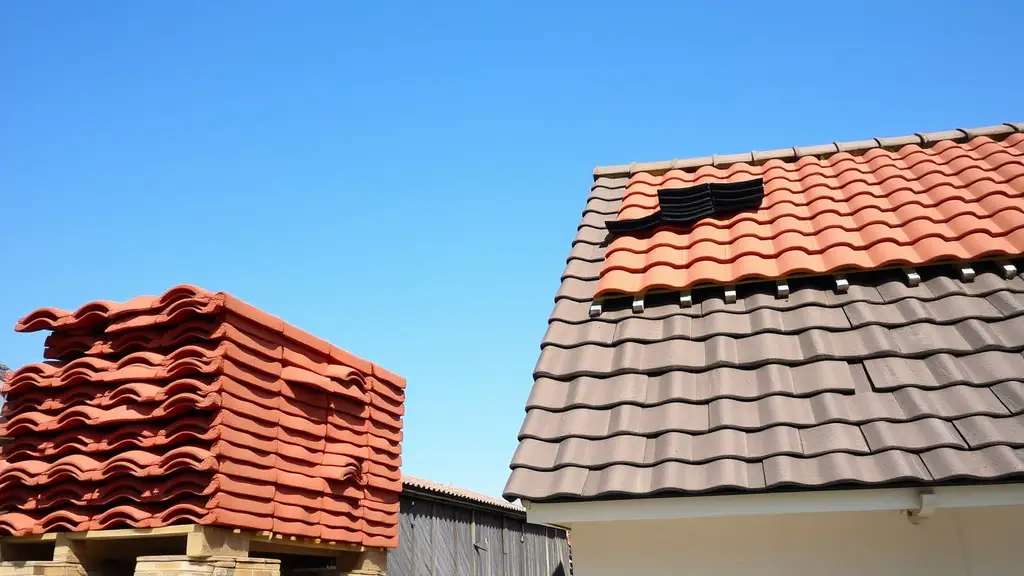
There is no standard: each manufacturer configures the pallet per model. The label gives the count; divide by tiles per m² to know how many m² a pallet covers — 240 tiles at 12 per m² cover 20 m². Order the whole roof from one batch: clay tile colour varies between batches.
Frequently asked questions
How do I work out how many roof tiles I need?
Find the real roof area (plan area divided by the cosine of the pitch), add 5–10% waste and multiply by the tiles per m² of the chosen model. Ridge, verge and ventilation tiles are counted separately.
Do concrete tiles need fewer pieces than clay?
Usually slightly fewer per m² (about 10–11) because they are larger, but each piece is heavier — check that the roof structure is designed for the weight.