
Updated · 4 min read
In short
- A surface pump lifts water by suction only to about 7–8 m; deeper water needs a submersible pump.
- A family home typically needs 2–3 m³/h at around 3 bar.
- A 50–100 litre pressure tank keeps the pump from starting at every tap.
Surface pump or submersible
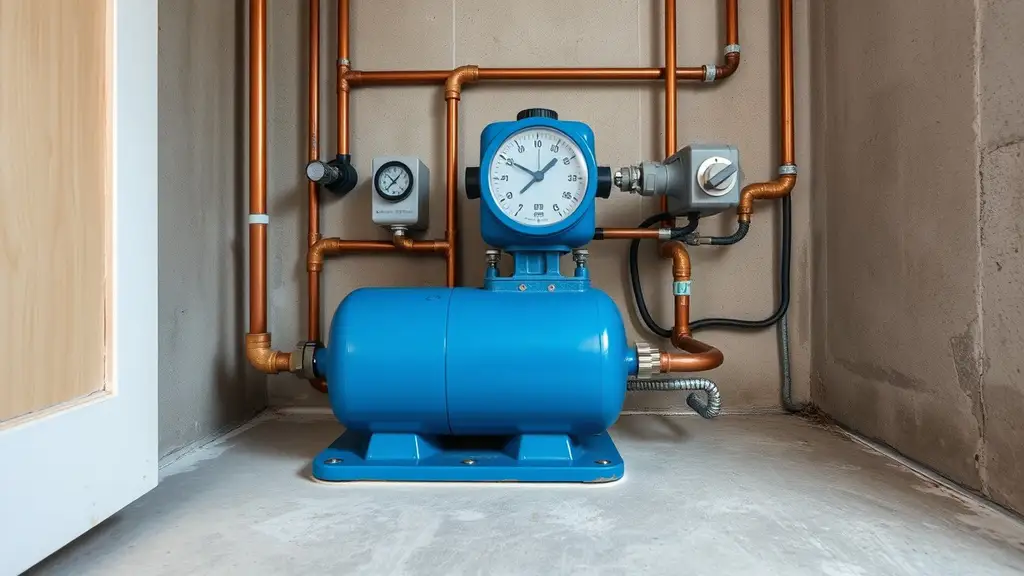
- Surface pump with pressure tank (indoors or in a pit): cheap, easy to service. The physical suction limit is about 7–8 m from pump to water level, including hose losses.
- Submersible pump in the well or borehole, with tank and pressure switch above ground: for deep water, narrow boreholes and steady flow.
- Jet pump: a surface variant that reaches a little deeper at lower efficiency.
Flow and pressure
Estimate peak flow from outlets that may run at once: shower about 0.6–0.8 m³/h, kitchen tap about 0.5 m³/h, washing machine 0.3–0.5 m³/h, a sprinkler 0.5–1 m³/h. A house with two bathrooms and a watered garden easily reaches 2.5–3.5 m³/h.
Required pressure = pressure wanted at the highest tap (about 2–2.5 bar) + height difference + pipe losses. The pump must deliver peak flow at that pressure — check the curve on the data sheet, not the maximum flow on the box, which is at zero pressure.
Tank, pressure switch and protection
- Membrane tank of 50–100 litres for a house; too small a tank makes the pump cycle and wear.
- Pressure switch: typically cut-in about 1.5–2 bar, cut-out about 3–3.5 bar. Tank air pre-charge (pump off, system drained) about 0.2 bar below cut-in.
- Dry-run protection stops the pump if the well runs dry; a foot valve on the suction line keeps it primed.
- A sediment filter after the pump protects the system from sand.
- Variable-speed (inverter) pumps give constant pressure and lower consumption at a higher price.
Common faults
- Pump starts for every glass of water: tank lost its air charge or the membrane is split.
- Pump runs but no pressure: air in the suction, blocked foot valve or the water level has dropped.
- Pump never stops: switch set above what the pump can reach, or a leak.
Frequently asked questions
What size pressure tank should I choose?
A bigger tank means fewer pump starts. For a house, 50–100 litres is common; 24 litres works for low use, but the pump starts almost every time a tap opens.
What pressure should a home water pump be set to?
Typically cut-in at about 1.5–2 bar and cut-out at about 3–3.5 bar. The tank's air pre-charge, checked with the pump off and the system drained, is set about 0.2 bar below cut-in.