
Updated · 4 min read
In short
- Flat and cross-head screwdrivers plus an adjustable spanner cover most tap repairs.
- An Allen key set and slip-joint pliers help with hidden hex screws and scaled-up nuts.
- Have PTFE tape and silicone grease ready, and plug the drain before taking anything apart.
The basic tools you probably already have
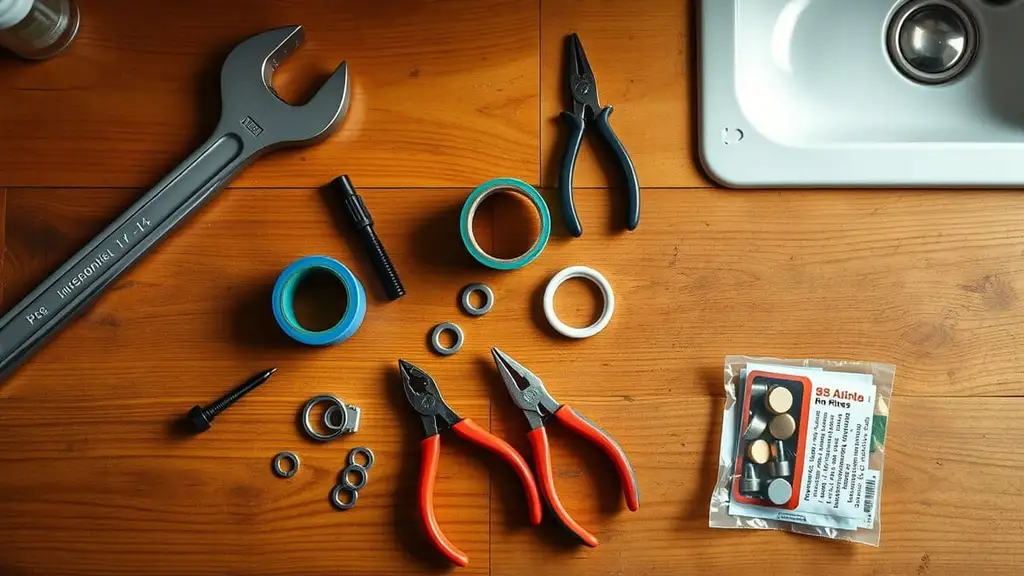
The good news about repairing a tap is that in most cases you don't need a specialist toolkit. A flat-head and a cross-head screwdriver cover most of the screws used to fix handles and decorative caps, and almost every home has both. Besides screwdrivers, an adjustable spanner is useful for undoing the nuts under the tap, where the size varies from model to model and a fixed spanner of the wrong size simply won't grip.
Put a towel or old cloth next to the work area from the start, not just at the end for cleaning up. The area around the tap stays wet throughout the repair, and having a cloth to hand saves you hunting for something absorbent with wet hands exactly when you need it.
More specific tools, useful if you do plumbing often
If you plan to do such repairs more often, or you have an older house with less standard fittings, a few extra tools are worth buying. An Allen (hex) key is needed for some tap brands, where the screw holding the handle isn't a normal flat or cross-head screw but a hex one, often hidden under a small decorative cap. Without the right size of Allen key the handle simply won't come off, however hard you try.
Slip-joint or water-pump pliers with adjustable jaws help a lot with nuts that have scaled up over time — limescale deposits, common with hard water, can practically glue a nut to its thread, and an ordinary spanner slips or doesn't grip tightly enough to undo it without damaging the part. Pliers give a firmer grip in exactly these awkward situations.
Consumables to have to hand
Besides the tools, a few cheap materials are worth buying before you start rather than discovering they're missing halfway through. PTFE thread tape is essential on any joint you undo and reassemble — it seals the thread and prevents small leaks that are hard to spot straight away but appear over time if the thread has no fresh tape.
Silicone grease for seals is another small item with real impact: applied to a new washer or O-ring before fitting, it extends its life and makes fitting easier, reducing friction and the risk of damaging the seal during installation. It's cheap and sold in any DIY store, but often forgotten by people repairing a tap for the first time.
Prepare the work area before dismantling anything
A simple but often skipped step is preparing the work area before removing the first part. A plug in the sink drain, or simply a cloth pushed into the plughole, stops small parts — screws, springs, small O-rings — from falling in during dismantling and disappearing instantly down the drain.
It also helps to lay out the parts in the order you remove them — a plate or small box next to the work area helps you remember the exact reassembly order, especially if the repair takes longer than expected or is interrupted halfway.